LARPing enthusiasm: the AI creativity frenzy
- IA
- Opinion
- 6 min.
This article is the first in a series about AI programming called "LARPing enthusiasm" (LARP stands for "live-action role-playing"). It is a direct reaction to the amazing talk "We were meant to be" by Lena Reinhard where she developed this idea that deeply resonated with us. Lena's work is remarkable, and we highly recommend taking the time to listen to her.
In the last 8 weeks, I have developed (and published) 3 Kotlin Multiplatform libraries from scratch, fixed & updated a complex fourth library, fully specified (features & architecture) two client-server app services, started the development of these services, and created a technical tool for my day-to-day use. I've also written the content of an entire website (on which you are reading this article), in two languages. Because I could.
That's the power of AI: giving life to ideas that used to take months or even years of dedicated effort to build. As a neurodivergent individual, this ability to see all my ideas taking shape is a drug. Literally. I sometimes cannot sleep because I want to create. It obsesses me.
I've always defined myself as an architect: I design the technical solution. I solve the problem, resolve the issues, write the proof of concept, and walk out. I really want to see the finished product, a.k.a. the reification of my vision. But I really really do not want to write it myself. I loooooove programming, because I'm a problem solver. Once the problem is solved, I do not linger around. Moving on to the next challenge is where my true passion lies.
Hey Claude, I want a terminal manager Compose desktop application that allows me to manage my terminals exactly how I envision. There's no terminal emulation in Compose desktop? That's OK, let's build one! By the way, what's a PTY? a VT? a TTY? Explain it to me before implementing. I want to learn and understand.
This is exhilarating. I'm building something new, charting new territories, and learning a lot in the process. And that combined experience of building and learning lights up a dangerous part of my brain.
A few months ago, with a friend of mine, I started playing Satisfactory, a famously addictive factory-building video game. Satisfactory's world was private. Whether I played alone or with a friend didn't matter: what we built there had no consequences beyond the dopamine rush our creations gave us. It quickly became an obsession. I had visions of the game every time I closed my eyes. I couldn't sleep; I had to play the game. I eventually came to the realization that my sleep pattern was the least of what was being impacted. My family life and interactions with my wife and kid were too. When I pledged to never open that game again, my wife told me she felt I had walked out of a dark tunnel.
I need to be careful, because what I felt then about a video game is exactly how AI makes me feel today.
AI is transforming the way we build websites, content, ideas, applications & services. Is it really enthusiasm I feel when I see all my ideas put into shape? Do I really get to choose how everything works? Am I really creating, or am I led to believe I am creating?
The terminal tool I "created" uses many technologies I already know, and it implements decisions that are my own. I understand them. Yet I didn't write a single line of code. I made sure I could understand it if the need arose, but I probably never will have to because I'll always have Claude to work on it. Is it my tool?
If everybody can create, what becomes the value of my creations?
In a YouTube video, Hannah Fry interviews Nicklas Berild Lundblad on the philosophy of agency (the capacity to act on what we will).
Almost all society is premised on the fact that agency is scarce. [...] Think about a society where everybody can will ten times more, a hundred times more, thousands of times more. What does that mean if we increase the amount of will in society?
Nicklas Berild Lundblad
If anybody can will an app, then what's the difference between a creation in Satisfactory and a new application, however revolutionary?
I want to believe that the difference is my understanding of the problem and the creativity of my solution. I want to believe that I bring something to the world. In Satisfactory, nothing we built ever left the game. An application, at least, reaches other people. And yet I said earlier that I don't want to write it myself: if I hand over the writing, how much of the understanding stays mine? If AI gives everyone their own world to play in, what separates the architect of a game factory from the architect of a "real world" application?
Am I, once again, playing a video game that tells me to always build more?
Am I genuinely enthusiastic, or am I just sucked back into a "programmer role-playing game"?
Am I LARPing enthusiasm?
I don't think I'll find the answer by looking inward. We are at a tipping point, and the answer will come from somewhere else: from whether our reality stays shared. Developers have always gathered around the same languages, the same libraries, the same problems to solve together. Shared code is what lets us read each other's work, argue about it, and learn from it. If each of us now builds in a private world, with our own AI, will we still be able to meet around shared experiences of code? If we can, then maybe what I feel is just a new way of building together. If we can't, then I may be playing alone.
I need to go. Claude is waiting for my input. I'm building something new, something great, something that will make a change. I think.
It's Saturday afternoon. My daughter's coming to me: "Daddy, come play with me!"
I'm already playing, Kiddo. I am.
This is important.
I think.
These articles might interest you
Tutorials, lessons learned and best practices around KOSI and the Kotlin ecosystem, from the people who maintain the libraries.
17/11/2026
Inara has no magic: read the code it writes
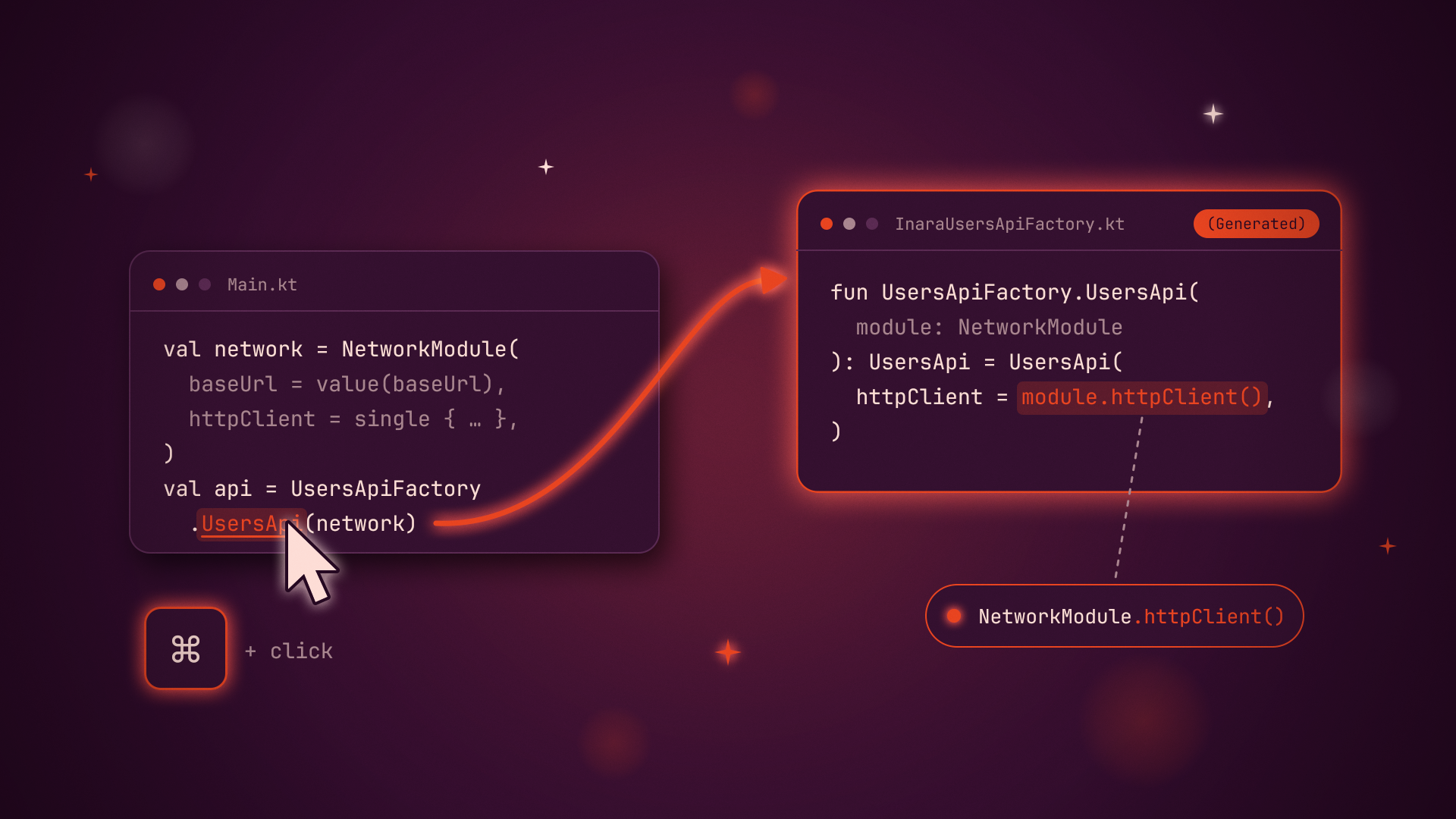
In most DI frameworks, a module is an anonymous bag of bindings, and dependencies are looked up by type. Inara gives modules an identity. Let's open the hood and read the code it generates: there is no trick, only plain Kotlin you can Cmd+click through.
Read more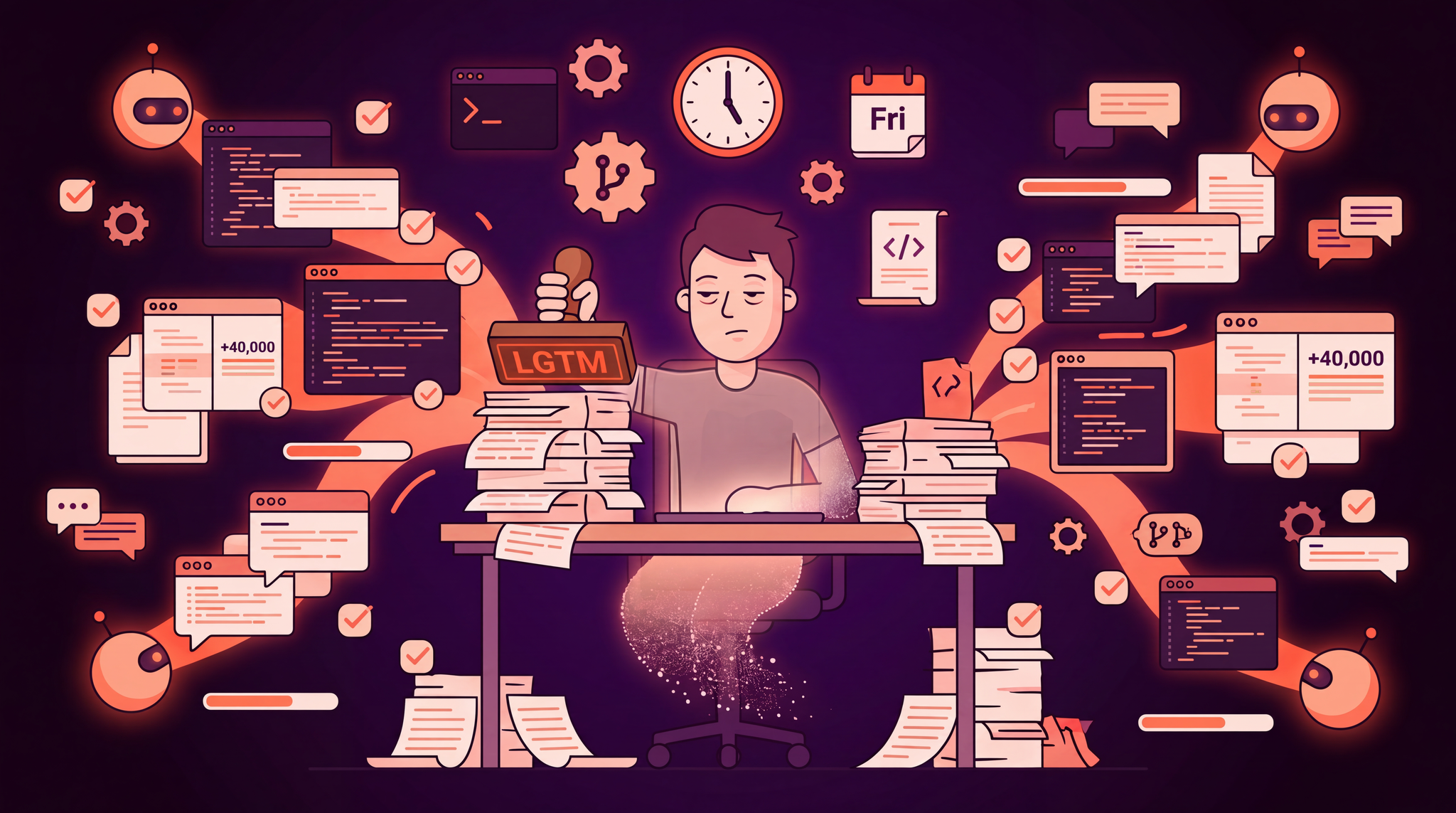
09/11/2026
LARPing enthusiasm: the ghost of disengagement
I can hand the work to AI, but not my judgment or my product sense. A story of sliding into disengagement, and of a comeback still in progress.
Read more
02/11/2026
Inara: Inject your dependencies at compile time
I created Kodein, yet I now believe it is detrimental to the Kotlin Multiplatform ecosystem. Meet Inara, a Kotlin Symbol Processor that resolves your dependencies at compile time, and learn why we are sunsetting Kodein.
Read more
26/10/2026
Agentic coding has killed cross-platform frameworks!
Agents made it cheap to write native code twice, so is cross-platform dead? Not quite: what changed is the question. Share what must be identical, and check it once.
Read more
17/10/2026
MocKMP: a mocking processor for Kotlin/Multiplatform
Want to run your unit tests on every Kotlin/Multiplatform target? MocKMP generates mocks and fakes at compile time with a Kotlin Symbol Processor, no reflection needed, and keeps a familiar mocking API.
Read more
04/09/2025
Use Swift in a Kotlin/Multiplatform library
Need to use a Swift-only iOS API such as CryptoKit in your Kotlin/Multiplatform library? Salomon shows how to bridge it through Objective-C and Kotlin/Native cinterop, with tested code.
Read more